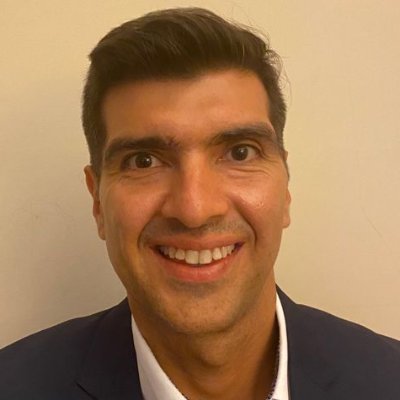
Ezequiel Molina
A World Bank economist and public policy expert, Ezequiel Molina has turned the observation of teaching into a tool to rethink education policy, with one foot in evidence and the other in the reality of schools.
Sobre Ezequiel Molina
< View All ContributorsUnderstanding what happens inside the classroom to change what happens outside
Ezequiel Molina did not enter education through pedagogy, but through economics. Trained at the National University of La Plata and holding a Ph.D. in Political Economy from Princeton University, his starting point was public policy, governance, and the real functioning of institutions.
This approach took shape at the World Bank, where he began working on issues related to poverty and development, and contributed to the 2017 World Development Report. There, he confronted a question he would later bring into education: why policies are not always implemented as they are designed.
His move into education emerged at that intersection. Not as a shift in field, but as an extension of his work: understanding how one of the most complex public systems actually operates. Along the way, his focus narrowed to the classroom—what teachers do, how they teach, and which conditions shape their practice.
Today, he is a Senior Economist at the World Bank and a leading figure in work on teachers and educational technology in Latin America. He has led global initiatives such as Teach and Coach, designed to observe teaching and improve in-service teacher professional development. His approach remains consistent: before intervening, it is essential to measure with precision.
He has worked across Africa, Asia, and Latin America, combining research with hands-on work alongside governments. He has published in journals such as the Journal of Economic Perspectives and, more recently, has incorporated artificial intelligence in education into his agenda, leading pilots and advising teams on its use.
His trajectory points in a clear direction: improving education largely depends on understanding how teaching happens. And that requires looking closely at what takes place in classrooms every day.