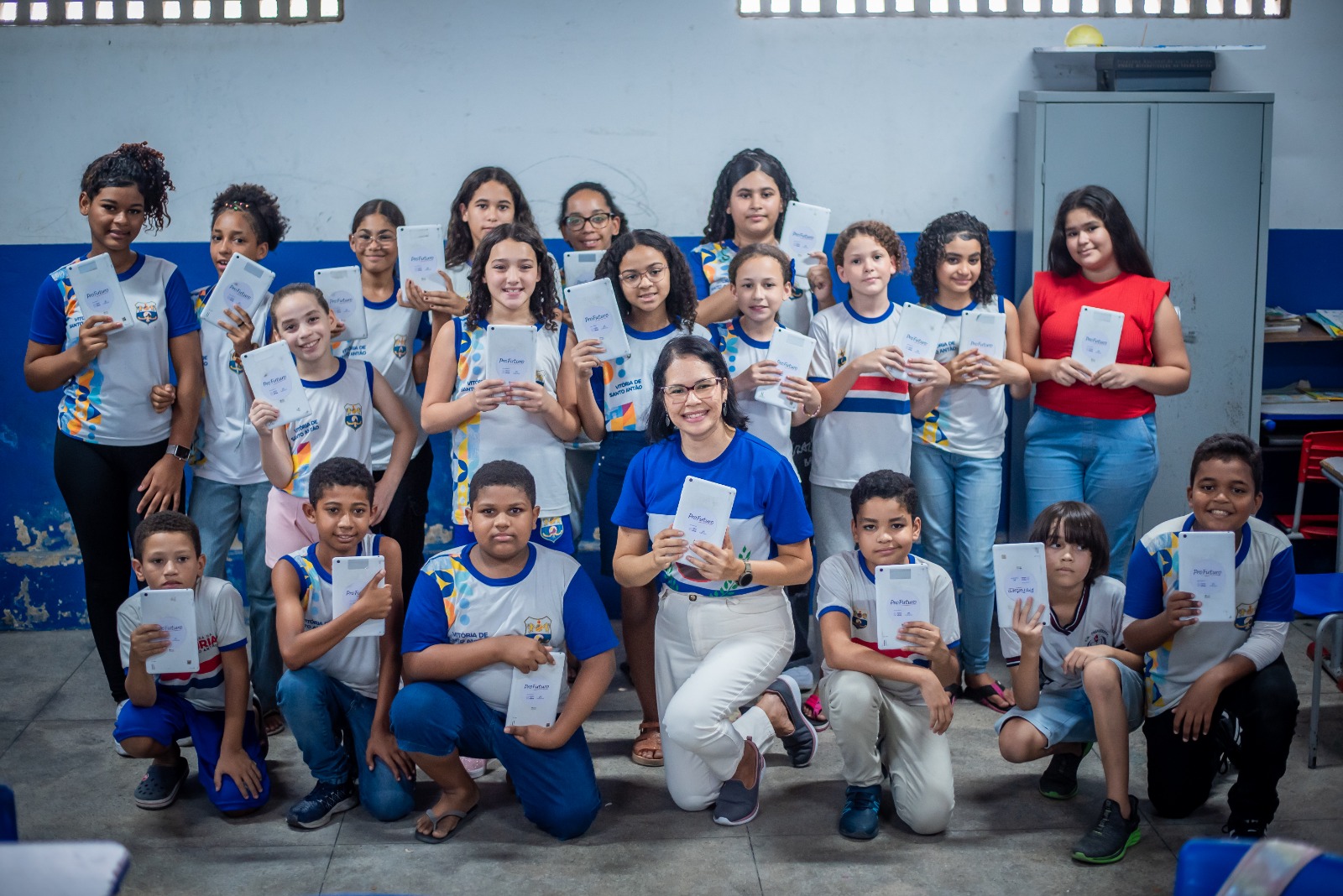

Since its creation in 2016, ProFuturo has promoted quality digital education in vulnerable environments, improving opportunities for thousands of children and teachers around the world, with solid evidence demonstrating its real impact. Today, it is an example of how European philanthropic cooperation, working together with various multilateral organisations and allies, can drive global solutions that, thanks to cutting-edge technologies and educational innovation, reduce gaps and transform communities.
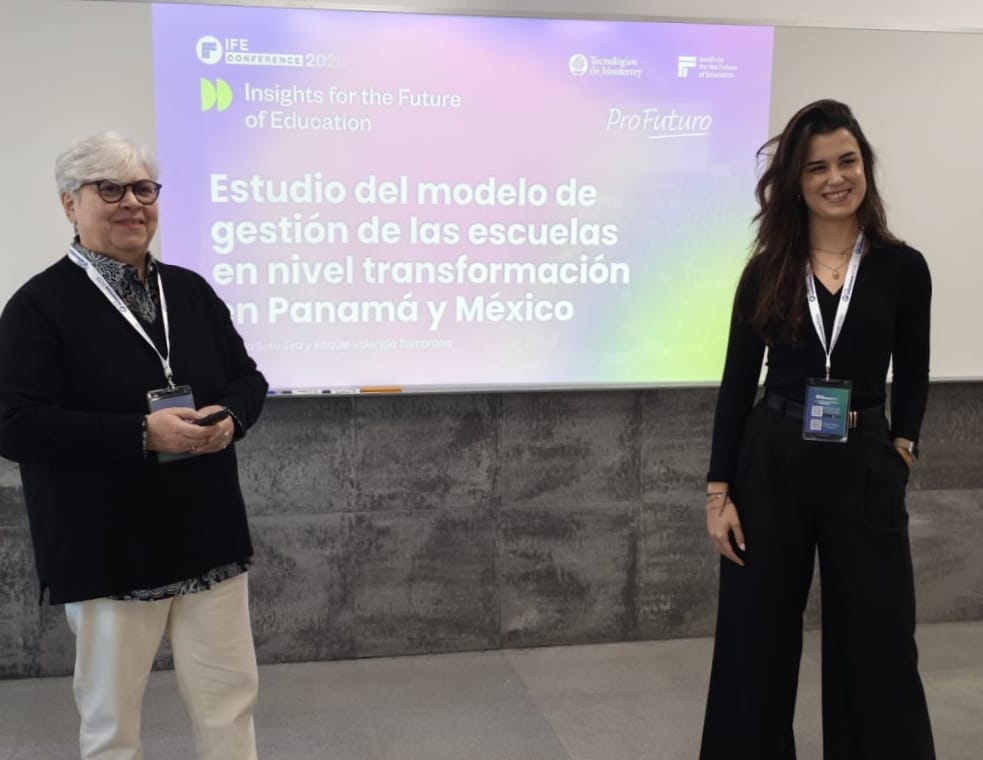
Throughout 2025, the programme has reaffirmed its commitment by participating in various international forums and conferences, reaffirming its commitment to educational innovation and technology. An example of this is its participation in the conference held in Paris last October by the Organisation for Economic Co-operation and Development (OECD), where ProFuturo demonstrated how European philanthropic cooperation can generate global solutions and reduce gaps in vulnerable environments through educational innovation and technology.
That same month, ProFuturo participated in the 15th Annual Symposium of the mEducation Alliance and the Alliance Member Day, organised by the World Bank in Washington, D.C. This double event brought together global leaders in education to share experiences, evidence and strategies aimed at improving educational quality in vulnerable contexts.
As a member of the Digital Transformation Collaborative (DTC) network, ProFuturo also attended the ADEA Triennale 2025 last autumn, one of Africa’s leading high-level forums for policy dialogue, peer learning and the exchange of knowledge and impactful experiences in education.
At the end of August, Santiago, Chile, hosted the UNESCO World Teachers’ Summit, a space to discuss the future of education and the global challenge of teacher shortages. There, Magdalena Brier, CEO of ProFuturo, shared how the programme has been supporting teachers as true agents of change for almost a decade, through training in pedagogical and digital skills adapted to each context.
Weeks earlier, at the 4th International Conference on Financing for Development (FfD4), Brier highlighted the figures produced by the programme after a decade of work, emphasising the 1.8 million teachers trained and the 5.1 million students who have benefited. Held in Seville, the event was attended by organisations such as UNICEF, heads of state and government, ministers and other representatives.
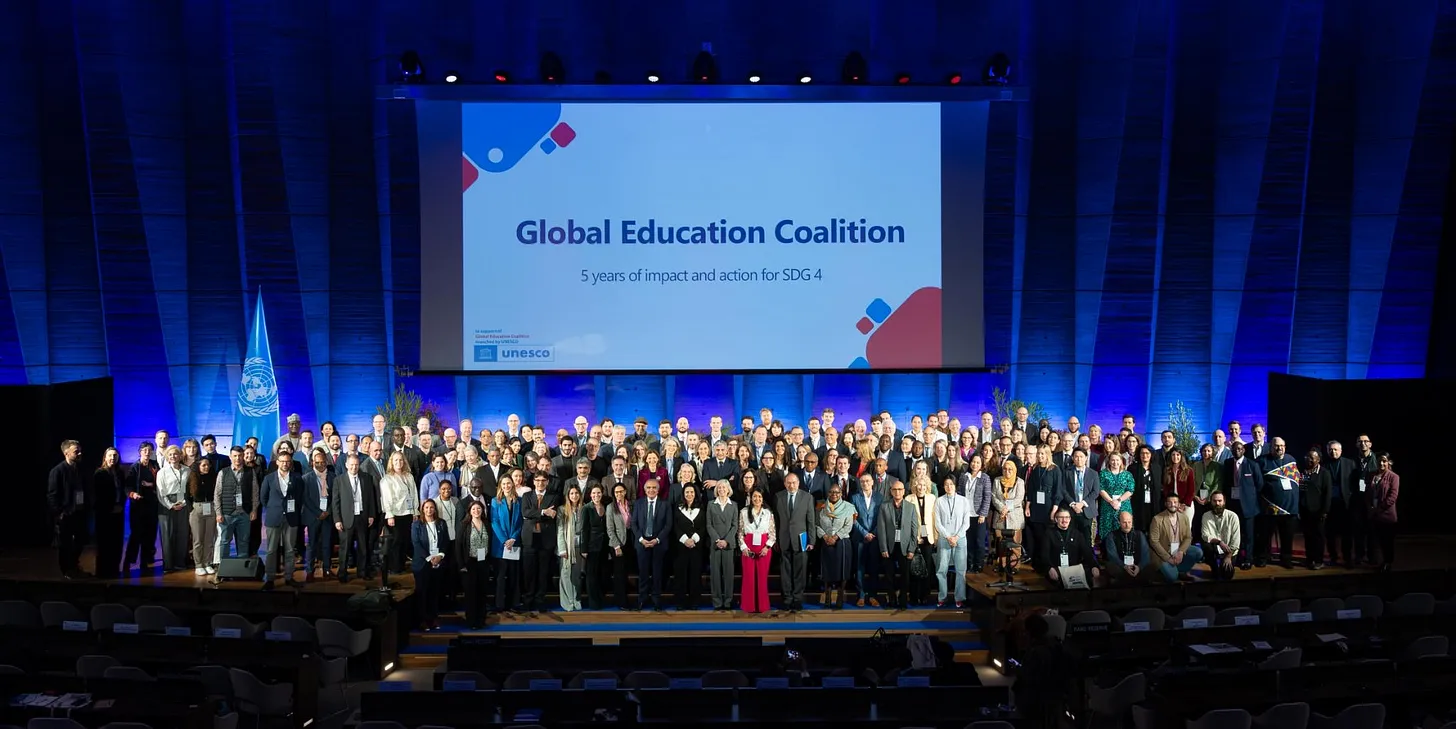
In addition, at the beginning of the year, ProFuturo participated in the CIES – Comparative & International Education Society, an event that brings together academics, researchers, policy makers and professionals from the education sector, as well as in the annual meeting of the UNESCO Global Education Coalition, an alliance that already has a network of 233 partners in 112 countries who are joining forces to maximise educational impact around the world.
ProFuturo has recently been invited to join the Education 4.0 Alliance network of the World Economic Forum in Davos, an alliance that seeks to promote innovative approaches to the development of Education 4.0 skills, as well as to encourage the adoption of these skills in early childhood learning systems.
Alliances that generate knowledge
Working as a team allows us to look beyond the classroom and understand the challenges of digital inclusion from multiple perspectives. Proof of this can be found in the studies and reports produced jointly by ProFuturo and other entities, with the common goal of reducing the digital divide and promoting a more inclusive education. Throughout 2025, the following publications have been released:
The arrival of AI in education in Latin America: under construction
Carried out in collaboration with the Organisation of Ibero-American States for Education, Science and Culture (OEI), this document, authored by academic Axel Rivas, professor at the University of San Andrés, unpacks the opportunities that AI opens up for education, especially in vulnerable contexts, while warning of the risks of unplanned implementation and the challenges of ensuring inclusive, equitable and truly accessible technology.
See here for the full report.
Digital education in the Americas: good practices for transformation
In collaboration with the Organisation of American States (OAS), following the positive results of the first mapping exercise, launched in 2022, this second edition set out the following objectives: to highlight initiatives in Latin American and Caribbean countries that promote educational improvements through digital technologies; to analyse common and original aspects of these initiatives in order to build knowledge about their starting points, purposes, characteristics and results; and to systematise information on the initiatives to facilitate their transfer to other contexts and contribute to the promotion of digital education in the region.
See here for the full report.
Approach to digital skills for teachers in Latin America
Prepared in conjunction with the Inter-American Development Bank (IDB), the document is based on teachers’ perceptions of their own abilities to effectively integrate digital technologies into their educational practices. The data collected through the self-assessment based on the Edutec Guide provides a valuable source of guidance for education authorities in designing public policies and training plans that respond to the real needs of teachers.
See the full report here.
Assessment of the socio-economic impact of foreign direct investment in Latin America and the Caribbean
In its report Assessing the Socio-economic Impact of Foreign Direct Investment in Latin America and the Caribbean, the Organisation for Economic Co-operation and Development (OECD) highlights ProFuturo alongside other programmes that ‘provide digital and technical skills to underserved communities’ by ‘building national and international partnerships’.
See the full report here.