Frequently Asked Questions
- What motivated the Telefónica Foundation and the “la Caixa” Foundation to join forces to launch ProFuturo?
In 2016, Fundación Telefónica and Fundación “la Caixa” decided to join forces and pool their extensive experience and knowledge in the fields of education and digitalization to help address one of the most pressing challenges for the future of the next generations: the ever-widening gap between the quality of education received by children in developed countries and that in developing countries.
- Why does ProFuturo focus on technology-based education?
While the education systems in developed countries have been undergoing a process of digitization and transformation for years—integrating technological resources and tools, as well as innovative methodologies in the classroom—in most parts of the world this “revolution” has not yet taken place.
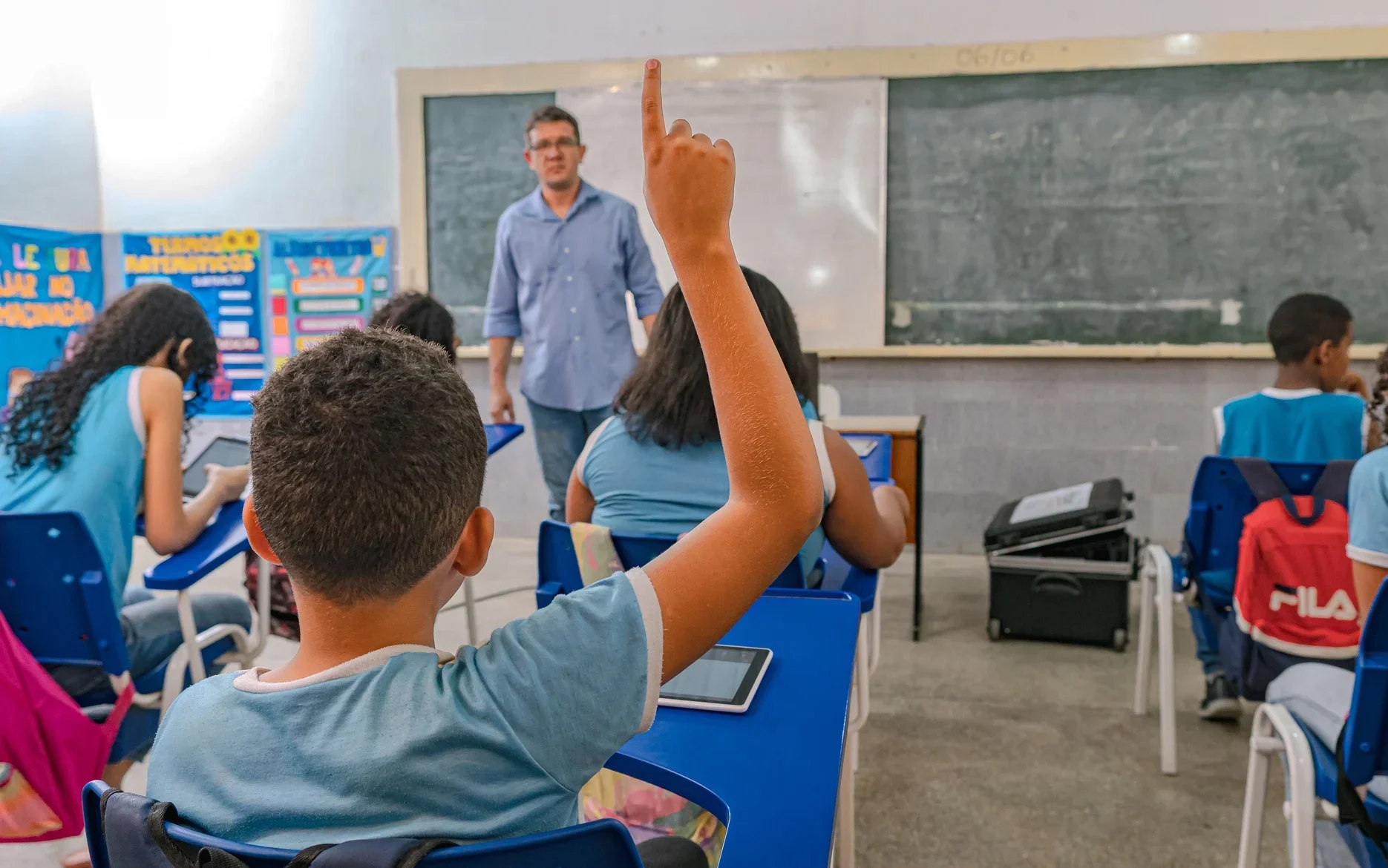
ProFuturo reaches schools that lack internet access or do not even have a computer. The program, therefore, often represents students’ first exposure to technology.
Additionally, in the communities where ProFuturo works, textbooks or quality educational materials are often unavailable, so technology and digital resources make high-quality content accessible to them.
- How does ProFuturo integrate technology into the classroom?
ProFuturo is committed to an innovative educational methodology that uses technology for a specific and distinct pedagogical purpose. Technology in the classroom should be aimed at facilitating the ability to research, learn about, analyze, and interact with information, ideas, and people that would otherwise be impossible to bring together in one place.
Thus, students’ use of technology is always guided and structured by the teacher and pursues a specific objective.
It is worth noting that ProFuturo’s educational program is designed to be implemented in the classroom as a complement to the teacher’s lesson plan. Technology is simply another tool that complements—rather than replaces—the educational resources of teachers and schools.
- How does technology improve student motivation?
Technology introduces a very important motivational component into the learning process, as it opens the door to an engaging and dynamic world to which many students do not have access.
The use of technology supports and facilitates the work of teachers and students in the classroom. On the one hand, it allows for greater flexibility and enables students to learn at a pace better suited to their needs; on the other hand, it makes it easier for teachers to monitor their progress in real time.
Furthermore, educational innovation through technology enhances interactivity and access to information. ProFuturo brings technology and educational innovation to those who would otherwise have no way of accessing new teaching methodologies and tools—from rural areas to refugee camps.
- What criteria are used to decide where the program is implemented?
ProFuturo operates in vulnerable environments, including both urban and rural areas as well as remote locations. The program is adaptable to different contexts—with or without internet connectivity—which allows it to be implemented in locations as diverse as the Brazilian Amazon rainforest or a refugee camp in Rwanda.
Working in partnership with third parties is essential for adapting to the local context; therefore, intervention in a given country or region also depends, to a large extent, on agreements reached with other organizations experienced in local education, as well as with each country’s Ministry of Education, in many cases.
- What is the ProFuturo Foundation’s position on the risks of using technology in education, especially given its direct impact on particularly vulnerable groups such as children?
ProFuturo believes that the dilemma is not simply “screens, yes or no.” The key is to establish responsible use in accordance with objectives for the pedagogical use of technology in the classroom.
That is why the question we should be asking is whether technology helps teachers enhance their students’ learning and, ultimately, teach more effectively—and helps students make the most of their academic experience. Based on ProFuturo’s evidence and evaluations, the answer is yes.
However, for this to be achieved, we must commit to an appropriate and balanced use of technology—and, of course, a responsible use, guided and supervised by the teacher. We must not forget that we are talking about children and adolescents, and it is essential to be mindful at all times of the purpose for which it is being used.
On the other hand—and no less important—it is a reality that technology helps overcome problems related to the quality of education, as well as those related to access, equity, and inclusion. That is why it is essential that new generations learn to engage with new technologies in a healthy and optimal way so they can enjoy all their benefits.