

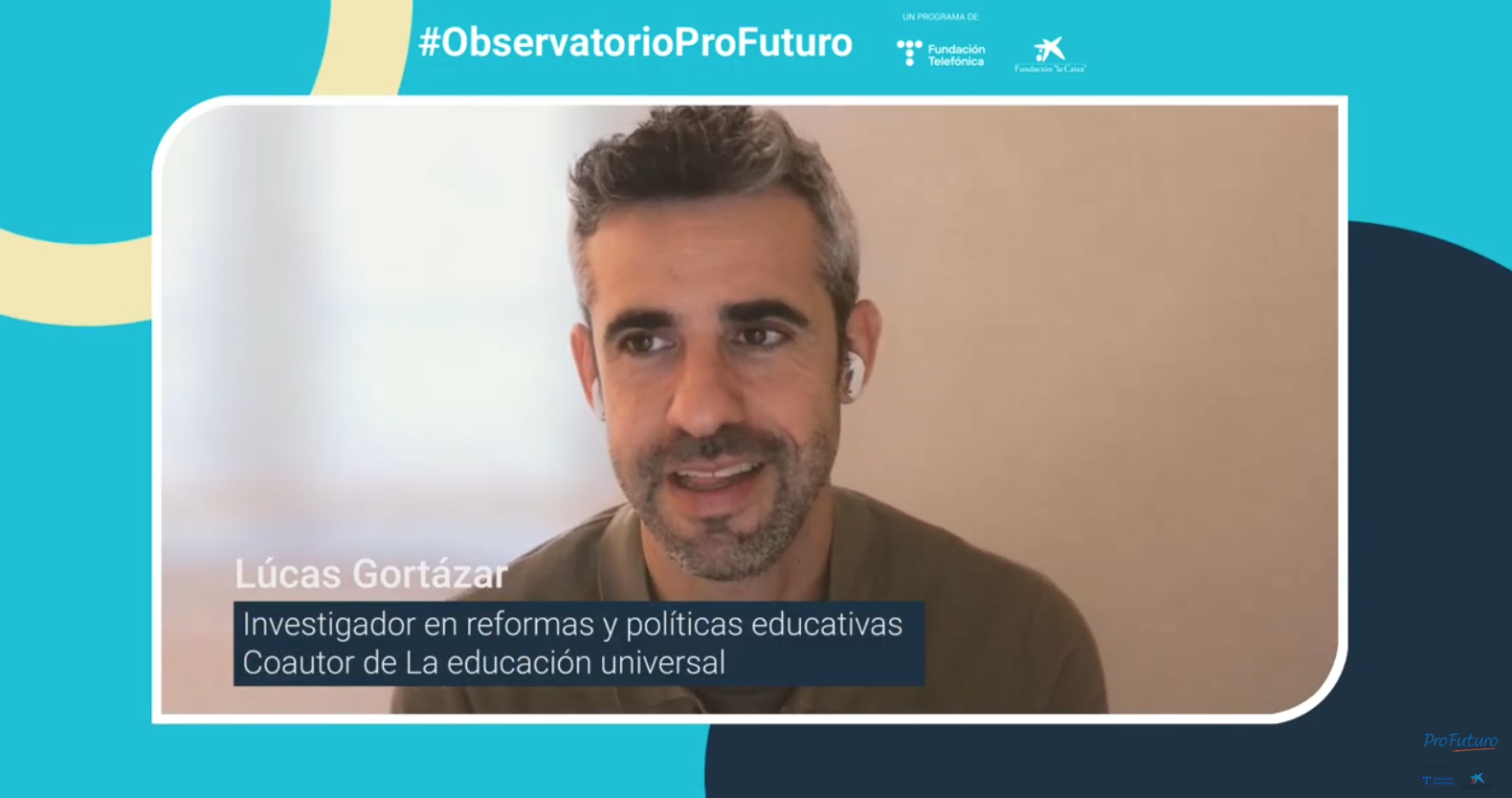
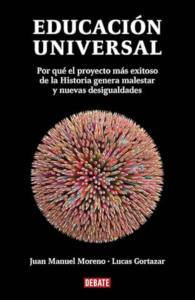
 For decades we assumed that universal education was an irreversible achievement. As if once mass literacy had been achieved, progress would simply continue by inertia. In the interview we recorded with Lucas Gortázar, researcher and co-author (together with Juan Manuel Moreno) of Universal Education: Why the Most Successful Project in World History Generates Discontent and New Inequalities, we discover that the story is slightly different.
Gortázar reminds us that the school as we know it is the result of an improbable alliance: the Enlightenment, with its ideas of equality and citizenship, and the Industrial Revolution, with its need to spread knowledge quickly and on a massive scale. That combination produced what he calls “the greatest expansion of knowledge in the history of humanity”: in one century, we went from mostly illiterate societies to a world where secondary studies are practically the norm. An evolutionary leap we could hardly have imagined one hundred years ago.
But the achievement came with fine print. Because, as Gortázar explains, what worked for a century has begun to show signs of exhaustion. The 2008 recession abruptly cut investment in education; later, the pandemic left millions of students out of school for months (and in some cases years). To make matters worse, the deterioration of democratic order and the multiplication of conflicts have turned the simple act of keeping a school open into a heroic feat in many countries. As a result, the system has stopped advancing, the product of a crisis that, in the researcher’s words, we do not know whether it is “one of growth” or “one of existence.”
In the conversation, he reviews these factors and points to a handful of issues that, in his view, will shape the immediate future of education: what role technology can play without widening gaps, how to rethink meritocracy in highly unequal societies, and above all, what place teachers should occupy in a system that demands more and more from them while supporting them less and less.
Anyone who wants to understand why universal education is going through this turbulent moment, and what real options we have to sustain it, will find many clues in this conversation and, of course, in the book that supports it: an invitation to think calmly about a system that affects us all.
Here, you can watch the whole interview: