Manuel Domingos Pedro Duas Horas
Regional coordinator in Angola

Regional coordinator in Angola
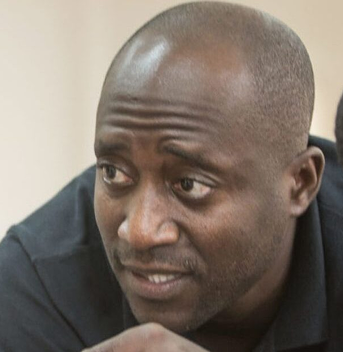
Manuel is the ProFuturo regional coordinator in Angola and leads the work of the local coordinators in four provinces of the country: Luanda, Caxito, Viana and Cabinda. Through his work at ProFuturo, he focuses on reducing the impact of poverty and the difficult living conditions faced by children in a single way: improving their education by bringing digital tools into the classroom.
Portuguese is the official language of Angola, although various local languages are also spoken, such as Kimbundu. Luanda is a city of just over seven million inhabitants, many of them displaced from Angola’s rural areas by the Civil War, which ended in 2002 after 27 years of conflict.
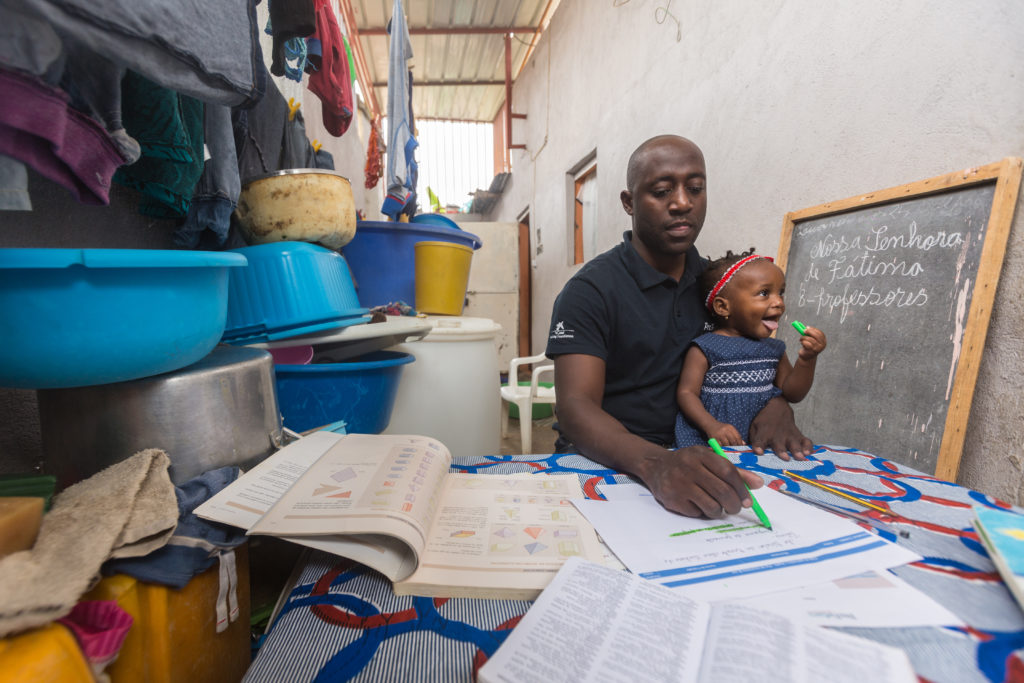
Manuel studied Mathematics at university and married his lifelong girlfriend, Maria de Fátima Lourenço Monteiro Duas Horas, a friend from his hometown with whom he now lives in Viana, a neighboring area ninety minutes by car from Luanda that is experiencing a revival thanks to industrialization and its proximity to the capital. Manuel and Maria de Fátima have four children: two boys and two girls. Queila Ana, the youngest of the family, is very bright and sometimes enjoys playing with her father while he prepares his school visits.
Before becoming coordinator of ProFuturo’s local coaches, Manuel was in charge of visiting schools in the area. To do so, he crosses the outskirts of Luanda every day, making his way through the stalls of the colorful street markets selling fruit and fish, and dodging potholes, mud, rubbish and the violence that lingers beneath the surface in a place of tremendous poverty, where women and girls are, moreover, often marginalized because of their sex.
Life in Luanda and its surrounding areas is truly hard for the most disadvantaged people. In addition, social and economic inequalities are very pronounced. Eighty percent of the population survives on less than two dollars a day, and only nine percent of the population has running water.
Three-quarters of the inhabitants of Luanda live in unofficial settlements, in shacks or small houses they have built themselves, which are demolished without warning time and again to build new housing developments for the country’s upper classes in their place. In the outskirts, life goes on despite the harsh conditions, the lack of supplies and the violence.
Manuel meets regularly with the teachers and principals of the five schools he is responsible for, in order to provide the in-person training they receive on a regular basis throughout the program; to answer any questions they may have about using the digital teaching platform designed by ProFuturo; to assist them in designing new curricular material that teachers can make available to other teachers using the platform; and to confirm that everything is running according to the quality standards set by ProFuturo.
This training is aimed at identifying each teacher’s best skills and carrying out ongoing follow-up work in the schools. The closeness that ProFuturo’s regional coordinators have with the schools, teachers and principals makes it possible to carry out fieldwork that provides very valuable information for ProFuturo’s process of continuous improvement.
Families are often especially curious about ProFuturo’s classes, and Manuel and the teachers take time to explain to them how technological resources are used in the classroom to support and improve children’s learning. In a social environment where technology is far from being fully adopted, one of Manuel’s goals is for families to develop a positive attitude toward technology.
For their part, the children love using the tablet classroom, as is the case with Emilia, a student in our educational program. Manuel sometimes attends the class and explains to them how to use the tablets to get the most out of them; this also lets him see the program’s effectiveness firsthand. Emilia, curious and eager to learn, has no qualms about firing off a thousand and one questions at Manuel every time he visits her school. For his part, Manuel is clear about one thing: education is key to closing the educational and digital gap in his country.
