Raimundo Cruz
Director of Kanata T-Ykua Indigenous Municipal School, in Manaus (Brazil)

Director of Kanata T-Ykua Indigenous Municipal School, in Manaus (Brazil)
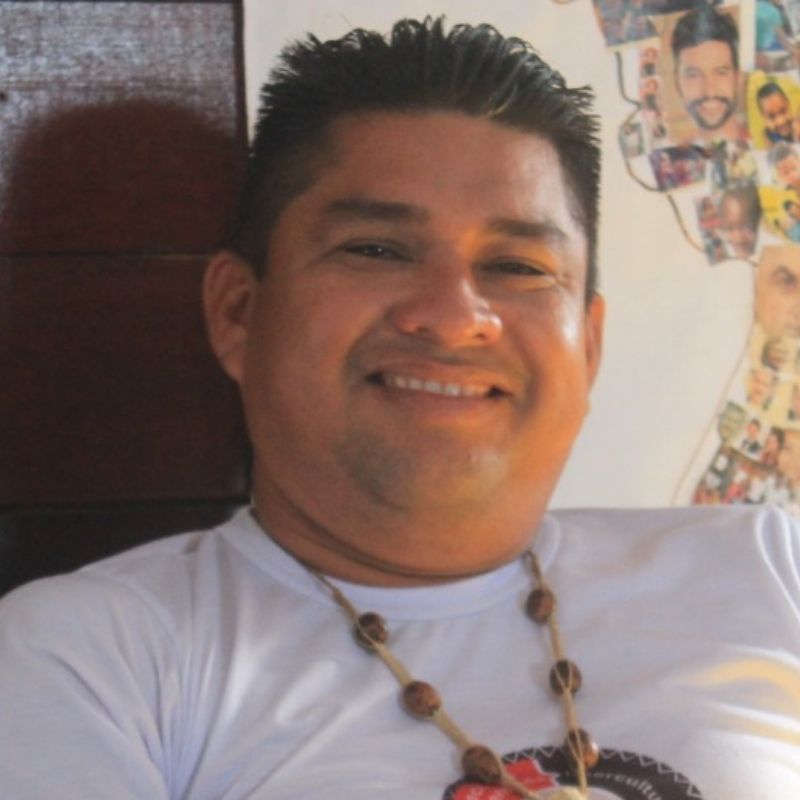
I belong to the Kambeba ethnic group, which played an extremely important role in the history of the Amazon and which was even considered extinct in the 20th century. Following the indigenous movement of the 1980s, my people began to assert their indigenous identity once again and fight for their rights. I grew up during that historic moment: I joined the movement at the age of 11. My parents, Diamantina and Waldemir, founded the Três Unidos community in 1991, in the lower Rio Negro, on the banks of the Cuieiras River in Amazonas. This is one of the five communities that are home to the 1,500 Kambeba Indians living in Brazil. My parents left the big city in search of health and education for their people.
Our community grew quickly. By 1993, there were more than 30 children. There was a need to teach literacy and provide schooling, but we had neither a school nor teachers. So my father, who was tuxaua — the community’s highest political and religious authority — thought of me.
By that time, I was already very interested in Kambeba history and language. I spent the whole day at my grandfather’s house; with him and my grandmother, I learned our people’s language, customs and traditions. I only went home to sleep! I liked my father’s idea. When I heard it, I thought: “I’m going to revive all of this.”
At first, I did everything from the living room of my house. My mother cooked, cleaned and did whatever was needed, and the other community members helped a lot too. I had only studied up to 4th grade, but I already had an idea of the kind of education I wanted to offer: intercultural learning that combined our traditional knowledge with subjects from the conventional curriculum, such as math, Portuguese, science, and so on. We developed our own methodology, and little by little it took shape — to the point that today we have the Kambeba school’s own pedagogy!
Education has run through my veins for as long as I can remember. I started sharing my knowledge at the age of 14 and have never imagined doing anything else
As time went by, my mother’s living room became too small for us. The community came together and built a small 50-square-meter school made of wood, with two tiny classrooms. No bathroom, no sink, no kitchen, nothing. My father fought to improve conditions with the support of the whole community. Although I already had some training, public officials were very reluctant to trust a young indigenous person’s ability to be a teacher.
By 2013, after years of struggle, things had improved considerably. The town council built a new building for our school, with two classrooms, bathrooms, a kitchen, a dining hall, a computer room and everything else we needed.
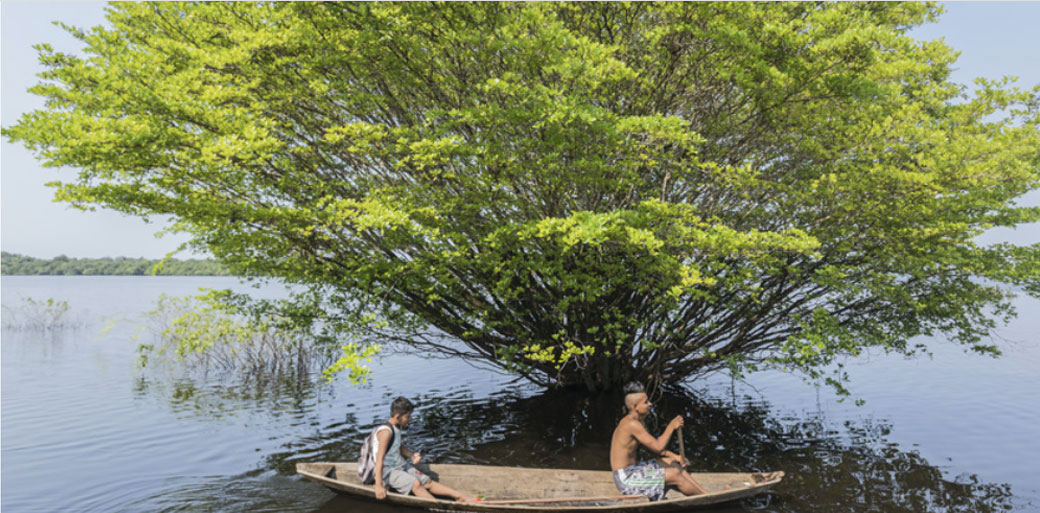
Today, our students’ good results reflect our work. We have had a 100% pass rate for years now, and student performance on assessments is excellent. Our teaching method has already been featured in magazines and on television, and we even had a visit from a team from Columbia University to learn about our bilingual Portuguese-Kambeba education method.
The first thing we work on in the classroom is our people’s traditional knowledge, the knowledge the children already have of their own reality. After that, we introduce the traditional curriculum with the other required subjects. Classes are mixed-age, with children from several age groups learning through play, happily. It is an intercultural education in which we want to work with both traditional and universal knowledge and prepare students for the world that awaits them.
At our school, we have developed several educational projects. This year, we worked on a storytelling project featuring tales from Amazonian folklore such as the Boto, the Mãe do mato, the Curupira… All these old stories are passed down orally and end up being forgotten, but children need to know them.
We also teach them to use the indigenous people’s hunting and fishing tools: the bow, the blowgun, the bow and arrows… Another project is about medicinal plants. My mother is a true expert in that field and makes all kinds of remedies. This knowledge also ran the risk of being forgotten.
The bow and arrows project was wonderful. The children took part in a major project and, in the end, they made it onto the Brazilian Archery Team. People said it would take eight years of practice to reach that level, but they achieved it in eight months.
Today, the authorities understand our educational process and our intercultural approach much better. In addition, the ProFuturo program has been a very positive contribution and has given us a great deal of freedom. We can combine our own knowledge with the platform’s materials, and we have gained the autonomy to develop classes and content tailored to our language, our history and our people.
With ProFuturo, we have gained a platform to store our classes, something essential. Much of the traditional knowledge of indigenous education is passed down from one generation to the next. Many of our living libraries are no longer with us; we have lost a great deal. Now, however, thanks to the platform, we can archive everything for future use. We can reorganize and plan according to our own system.
Today, the school offers Early Childhood Education and the first stage of Primary Education (grades 1 through 5). The second stage and Secondary Education are taught at another state school, which is also part of the community but is not run by us. In the meantime, we keep working to expand our educational offerings. We want our children to get an education and, if they can, even go away to study in the city. We want them to go and then come back to help their people.