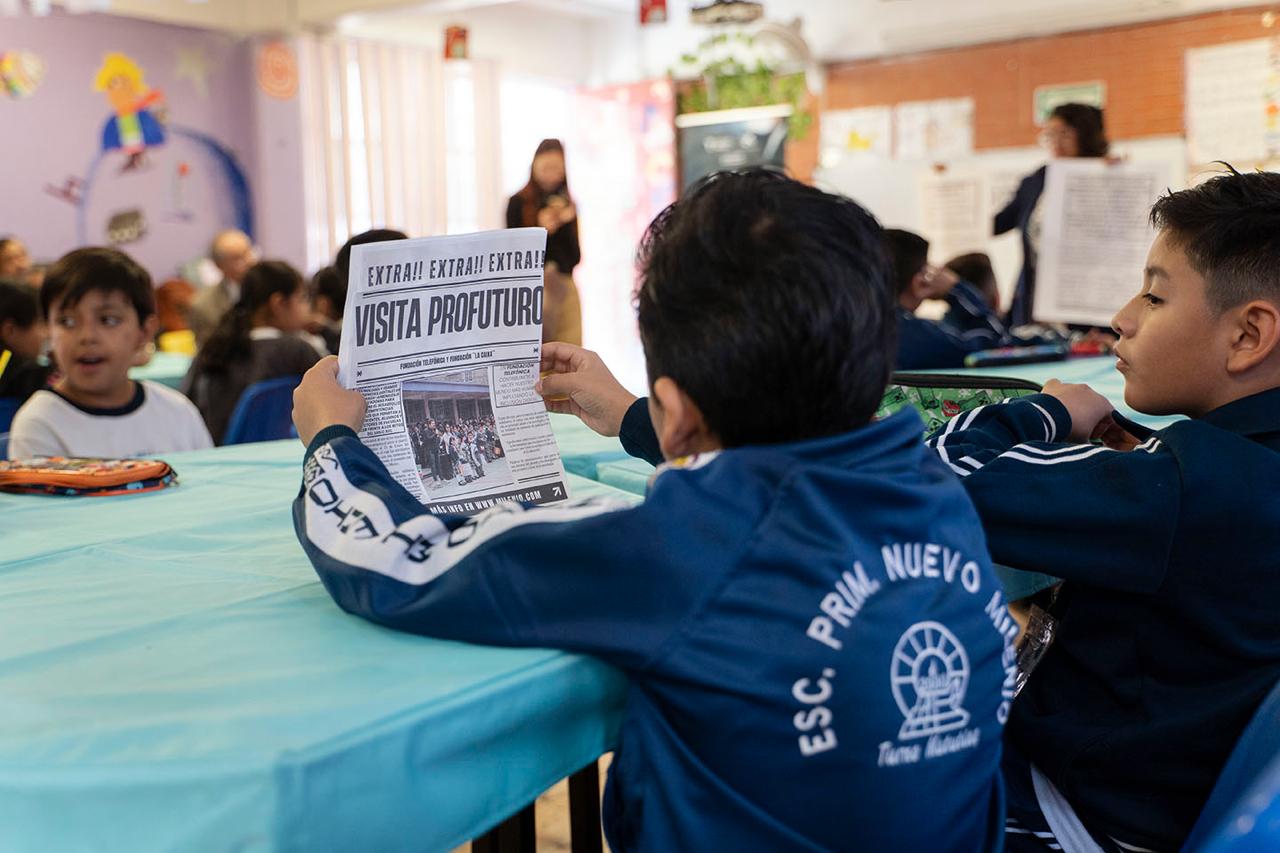
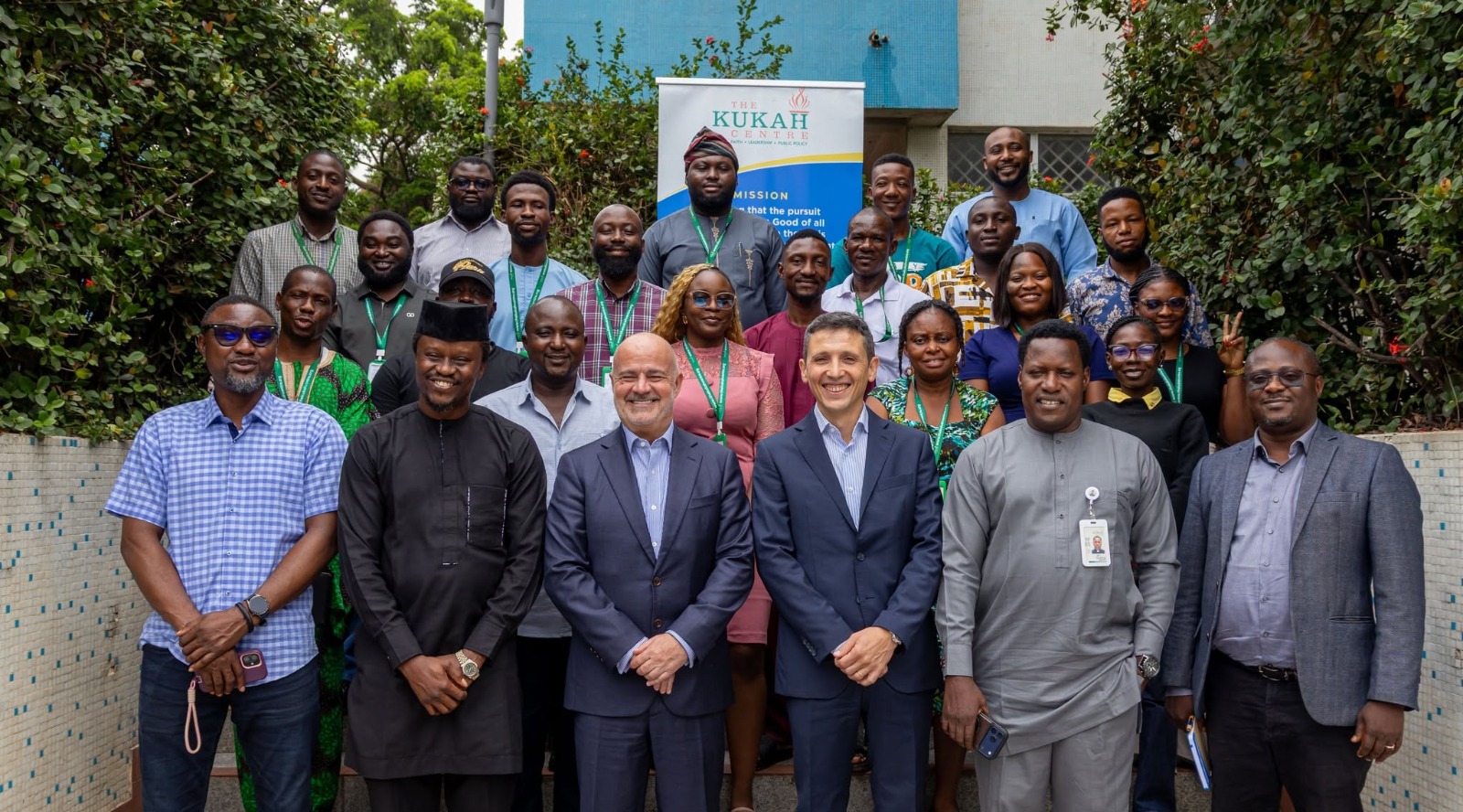
A delegation from ProFuturo and the Kukah Centre met this week with Kashim Shettima, Vice-President of Nigeria. As reported by various international media outlets, Shettima has announced his intention to further the digital transformation of Nigeria’s basic education sector, proposing the adoption of ProFuturo’s digital learning model across the country, following the significant progress the programme has made in schools throughout the nation.
The Vice-President described the programme as a practical complement to President Bola Tinubu’s Renewed Hope Agenda and the Government’s drive towards skills-based education.
Impressed by the programme’s achievements, the Vice-President stated that its success demonstrated the potential of technology-driven learning in addressing educational gaps and preparing Nigerian children for a rapidly evolving global economy. However, he noted that Nigeria’s population growth and the pressure on available resources make it imperative to scale up initiatives capable of expanding access to quality education.
ProFuturo launched in Nigeria in 2017. In Abuja, the country’s capital, a partnership agreement was signed with Kashim Shettima, the Archbishop of Kaduna, Matthew Man-oso Ndagoso, representing the Catholic Bishops’ Conference of Nigeria, and Bishop Matthew Hassan Kukah, founder of the Kukah Centre. To date, the programme has benefited more than 72,000 pupils, trained 1,150 teachers and reached 123 schools across 13 states.
West and Central Africa are two of the regions in the world with the lowest school enrolment rates among children aged 6 to 11; one in five children is outside the school system. In Nigeria alone, there are some 80 million children, 13 of whom do not attend school. Poverty, corruption and terrorism by Boko Haram are behind these figures.