In some community schools in Mozambique, teachers meet to share ways of teaching and to make materials from used objects: egg cartons, for example, are used to work on braille. In Nepal, teachers use stones, seeds and bottles to teach math. In Paraguay, accessible digital books make it possible to listen to texts, enlarge the print or watch sign language videos. These are responses to a shared concern: making sure that students with special needs can follow activities and learn alongside their classmates.
These experiences are part of Learning is For Everyone, a UNICEF Innocenti report that brings together research carried out in Cambodia, Djibouti, Kyrgyzstan, Mozambique, Nepal, Niger and Paraguay. The study combines an analysis of education systems with data and testimonies from teachers, families and students, and complements its findings with a review of earlier research.
The results show barriers that recur in different contexts, from prejudice to a lack of materials and teacher preparation. They also identify practices that schools are already developing. Based on that evidence, UNICEF organizes its recommendations into three areas: recognizing students’ needs in the right way, reforming teaching and providing the necessary resources. Following that path helps us understand what changes it proposes and what problems it is trying to solve.
Recognizing needs in order to organize support
The first recommendation starts from how disability is understood and, in this regard, the report adopts a social and rights-based perspective, which examines the relationship between the child’s characteristics and the conditions of their environment. A difficulty in using a book therefore requires reviewing the format of the material and the support available. This perspective places part of the response in decisions that the school can change.
What UNICEF found in the countries studied is that information systems used inconsistent definitions and frequently relied on medical rather than social classifications. Many children were left out of the records, especially those with less visible difficulties or without formal identification. As a result, the authorities did not have the information they needed to decide what services schools required.
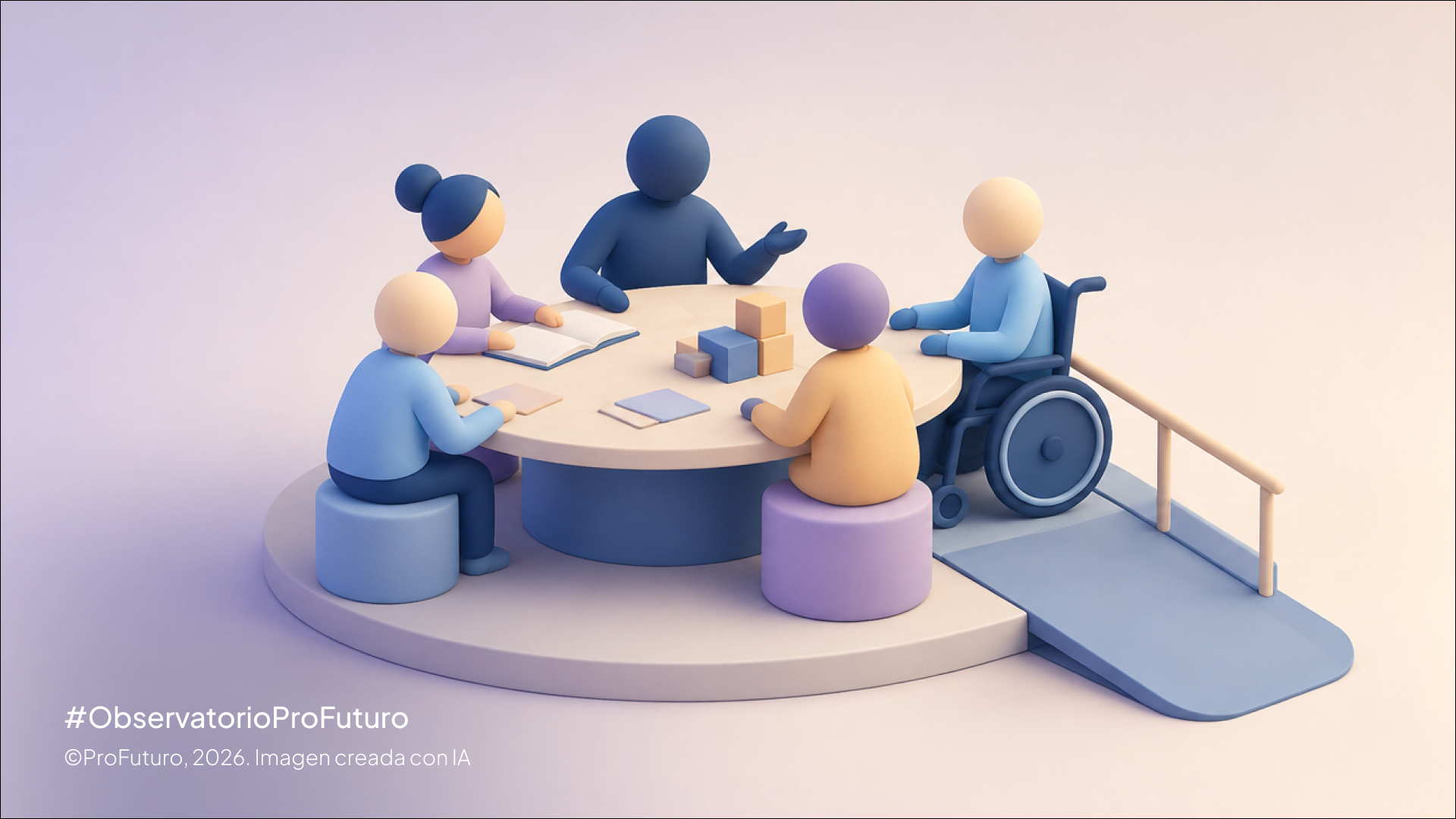
UNICEF recommends improving the identification of educational needs and data collection. To do so, it proposes tools that help teachers observe how each student participates, what obstacles they encounter and what adjustments can support their learning. That information should be used to plan support and check whether it is working. It also makes it possible to calculate the materials and professionals needed.
The research shows that identifying a need is barely the start of the journey. Families described difficulties in obtaining services even after getting a disability certificate. The procedures were long and, at times, they did not know which institution to turn to. That is why the report proposes clear procedures for accessing help and better coordination between education, health and social services.
Recognition also includes adults’ expectations. Testimonies indicate that stigma influences decisions about schooling and the support offered. When a child is believed to have little potential to learn, their opportunities may be limited from the start.
Combating those prejudices and explaining the benefits of inclusive education is another of the recommendations. UNICEF proposes working with families and communities, incorporating students’ experiences. Listening to them makes it possible to understand difficulties that records barely reflect and to learn what helps them cope in class. That participation provides information for organizing the educational response.
Reforming teaching and preparing those who teach
Once we know students’ needs, we must ask ourselves the next question: how should teaching change to respond to them? In the schools studied, teachers were already using some inclusive strategies, such as explaining content in several ways or turning to hands-on activities. In Cambodia, students with learning difficulties singled out teachers who looked for different explanations until everyone understood.
These practices coexisted with rigid curricula and limited training opportunities. Some teachers found it difficult to include students with disabilities in group work and preferred to assign them individual tasks. The interviews thus show a gap between the willingness to include and the preparation needed to organize a diverse classroom.
The report recommends incorporating inclusive pedagogies into everyday teaching, with curricula that allow activities to be adapted. These include Universal Design for Learning (UDL), which, from the planning stage, considers different ways of presenting information, engaging students and allowing them to express what they have learned.
Its application begins when preparing a lesson. If the goal is to understand a piece of content, the teacher can anticipate different ways of accessing it and observe which ones each student needs. Differentiated instruction makes it possible to adjust the work to specific needs, while cooperative learning organizes participation and peer support.
Digital education can facilitate these options. A text accompanied by narration offers different ways in, and display settings help students use it. These possibilities contribute to UDL when they are chosen based on the educational goal and the teacher checks how they support understanding. Integrating them requires knowing both the tool and the students’ needs.
UNICEF proposes transforming initial and continuing teacher training so that it includes this knowledge and its practical application. It also recommends drawing on the experience of those who are already developing inclusive responses, through mentoring and collaboration among colleagues. In several countries, teacher meetings made it possible to share activities and plan support.
Assessment must accompany that change. The study found students who took the same tests as their classmates despite needing other conditions to demonstrate what they had learned. It also documented adaptations, such as braille exams or oral responses. Establishing flexible guidelines for adapting assessment would help extend those practices. The options must respond to each need: granting extra time, for example, may be useful for some students and increase fatigue for others. The purpose is to obtain valid information about their learning and use it to guide teaching.
The report links these measures to the strengthening of mainstream schools. School leadership teams need preparation to organize collaboration with specialists and families, and to provide teachers with the conditions that allow adaptations to be sustained.
Providing resources that make inclusion possible
Teacher training needs materials and services to put it into practice. In the schools studied, shortages affected both general resources and items such as large-print books and tactile materials. Some teachers and families paid out of their own pockets for what children needed, while schools came up with low-cost solutions.
UNICEF recommends combining public investment with support for these teacher-led initiatives. Identifying useful materials, improving their quality and sharing them can expand the responses available. At the same time, authorities must incorporate inclusive criteria into the production and purchase of resources, so that accessibility is part of their design.
The accessible digital books used in Paraguay illustrate this possibility. Their features include narration, easy-read versions and sign language videos, as well as font and contrast settings. The teachers interviewed explained that these books allowed students with special needs and learning difficulties to work on the same content as their classmates.
Some students also require assistive technologies, such as screen readers. For these tools to work, documents must be prepared so that they can be interpreted by them. Decisions about content, platforms and devices need to take that compatibility into account, along with training in how to use them.
The report also points to the potential of artificial intelligence to scale up the production of accessible materials. A pilot carried out in Uruguay in 2025 cut production times from months to days or weeks, devoting the time saved to human validation and quality control. The experience provides information about production; the effects on learning require evaluation.
Sustaining the educational use of these resources requires reliable infrastructure and maintenance, with technical assistance when problems arise. Planning must take these costs into account from the outset, so that the tools remain available after they have been delivered.
Providing resources also covers physical accessibility and transport. The families interviewed described long journeys and unsuitable vehicles. At times, a caregiver, frequently the mother, had to give up her job to accompany the child. These difficulties could affect attendance or prevent children from going to school at all.
That is why UNICEF recommends improving the conditions for getting to school and taking part in its spaces. Investment must consider students’ everyday journeys and the adaptations needed within the premises.
The study also found limited or sporadic access to specialists. Strengthening their availability in schools would make it possible to support students and guide teachers, reducing travel and reliance on private services. The report also includes the hiring and support of teachers with disabilities, through accessible selection and training and appropriate working conditions.
Ensuring continuity of responses
The experiences gathered in the seven countries make it possible to understand how inclusion takes shape in school life. Behind an activity that a student manages to follow are decisions about how to teach, materials they can use and support available when they need it. UNICEF’s recommendations seek to give continuity to that relationship throughout their entire educational journey.
To achieve this, authorities must plan resources based on students’ needs, and schools need the means to review and improve their teaching. An accessible book can open up access to content; its usefulness grows when the teacher knows how to incorporate it into the lesson and assessment allows the student to demonstrate what they have learned. Each measure makes sense because of its connection to the others.
Part of the necessary knowledge already lies with teachers who find other ways of explaining and with students who tell us what helps them understand. Incorporating those experiences into training, the purchase of materials and the organization of services makes it possible to extend the responses that work. Progress is then seen in children’s everyday lives: in their participation with classmates, in what they learn and in the possibilities they find to keep studying.


 ProFuturo Observatory Team