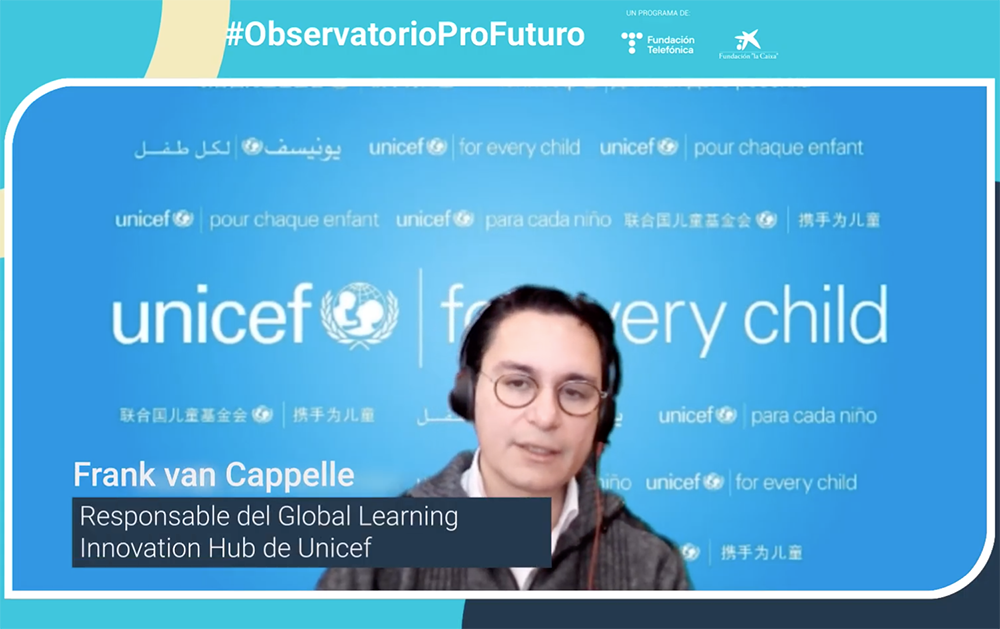
Education has spent years chasing its own digital mirage. Each decade promises its miracle, and as so often happens, the miracles never arrive. That is why it feels refreshing, for a change, to hear someone calling for us to slow down a little.
Before getting into algorithms or screens, Van Cappelle lays out the stark reality. “272 million children are out of school, and that figure has recently increased.” The next statistic is hardly more encouraging: 70% of ten-year-olds in low- and middle-income countries cannot read with comprehension. From that point on, any conversation about a technological revolution seems, at the very least, premature.
The diagnosis is not good (though it is hardly a surprise): “What we have done over the past 20 years has not worked.” A great deal of investment, very little improvement. The mistake, in his view, has been to confuse digitisation with transformation. “What we typically see is a translation of traditional pedagogies into a digital format.” The book turned into a PDF, the lesson turned into a video, assessment turned into an online test. Lots of pixels, very little progress.
This does not mean rejecting technology altogether, but it does mean demanding something useful from it. Technology can do what paper cannot: adapt materials, translate them into minority languages, produce accessible versions, and automate tasks that exhaust teachers and school leaders. Moreover, all of this can be done without the need to be constantly connected. This is where the most compelling idea emerges: AI that works offline.
UNICEF uses it to produce accessible textbooks in multiple languages, dramatically reducing costs. “We are trying to reduce costs by more than 90%… and we are already achieving that,” he explains.
The rest depends on teachers — and that is their “next frontier”. This is why UNICEF works with them to build a form of digital education that does not depend on having the latest screen, but on having purpose.
The conversation with Van Cappelle leaves a strange yet necessary impression: he does not sound like a technology guru, but like someone who has seen too many promises of the future to keep believing them. His defence of a useful, discreet form of technology, subordinated to teachers, feels almost countercultural in these times of automatic enthusiasm. Perhaps that is why listening to him is so interesting: he does not want to reinvent everything, only to prevent us from repeating the same mistakes with newer devices.
Here you can watch the full interview.