The development of RULER competencies is based on four basic tools, which are introduced to all members of the school community: principals, teachers, staff, students, and families.
Charter (statutes, charter). A school’s emotional climate is crucial to student learning, and all members of the school community must contribute to creating the best possible climate. Through this tool, each member of the community sets goals for creating that climate and takes responsibility for achieving them.
Emotional Meter. The Emotional Meter is a four-quadrant chart in which emotions are measured based on two variables: the intensity with which they are felt (high or low) and the type of feeling (pleasant or unpleasant). Each person places the emotion at a specific point within the quadrant, thereby learning to name and regulate their emotions.
Metamoment. When a particularly intense and negative situation arises, the Metamoment helps students and teachers manage the emotions triggered by it so they can make the best decisions for both themselves and the rest of the community. The fundamental question of the Metamoment is “How would my best self react to this situation?”
Blueprint (the plan). It supports the development of empathy and conflict-resolution skills by serving as a guide for reflecting on these conflicts and identifying the “healthiest” solutions.
The goal of RULER is to improve students’ relationships by strengthening their bonds with classmates, increasing their engagement in learning, and supporting their connections with teachers.
The program is implemented in schools through Yale’s Center for Emotional Intelligence, which has its own training and certification system (RULER Institute). It consists of a six-week online training course designed to equip a small team from each school to lead the implementation of RULER. This team, known as the “RULER Implementation Team,” must include at least one member of the administration (principal, vice principal, coordinator, etc.) and a minimum of two teachers or mental health professionals. The training covers the skills and principles of emotional intelligence and the tools developed at the Center.
Evaluation studies show that RULER fosters a range of behaviors and changes in the school climate that are essential for the positive development of young people. Furthermore, impact evaluations of the method support educational practice and public policy by demonstrating that emotional intelligence can improve the outcomes of educators, students, and school leadership teams in schools serving students from preschool through 12th grade. Let’s take a look at those results:
Positive Changes in School Climate
RULER enriches the school climate by improving teachers’ instruction and increasing student engagement. In a study examining fifth- and sixth-grade classrooms that implemented the RULER method for two years, it was observed that these classes exhibited greater emotional support as well as improved instruction and classroom organization. Another study exploring the source of these positive changes in the school climate found that the key to these changes was increased student engagement.
Improved Academic Performance
Students who participate in RULER achieve better academic results, particularly in language arts and in their work habits. In the study mentioned in the previous paragraph, students in classrooms randomly assigned to receive RULER earned higher grades after one year than students in classrooms that did not use RULER. Specifically, students in RULER classrooms earned significantly higher grades in language and literature and were rated by their teachers as having better work habits and behavior compared to students in classrooms without RULER.
Better-Quality Relationships
RULER’s goal is to improve student relationships by strengthening their bonds with peers, increasing their participation in learning, and supporting their connections with teachers.
Research shows that adolescent students who reported having a lower level of connection with teachers (compared to their peers) scored significantly lower on all indicators of adjustment and significantly higher on indicators of maladjustment compared to students who reported high and moderate levels of connection. These findings contribute to the growing body of literature focused on the importance of promoting feelings of connection among adolescents and support the adoption of RULER in schools to help students feel more connected.
Less Bullying and Aggressive Behavior
The Center for Emotional Intelligence conducted two studies, in 2012 and in 2019, in which it examined the impact of RULER on student behavior. These studies found that students in schools implementing this method are less likely to engage in bullying and exhibit fewer aggressive behaviors after one year of implementation.
Social-emotional learning should be taught in schools in the same way that math, language arts, or English are taught. Doing so will not only help increase students’ cognitive abilities but will also contribute to building better, more inclusive, and fairer societies.


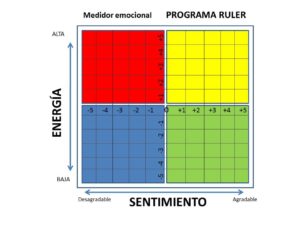 Image: RULER Method.
 ProFuturo Observatory Team