Running a school should be about improving how students learn. But it isn’t. In practice, school principals spend 76% of their workday on administrative tasks: repetitive forms, meetings that could be replaced by emails, and reports that duplicate information. Out of every 10 hours, only 2.4 have a direct impact on learning.
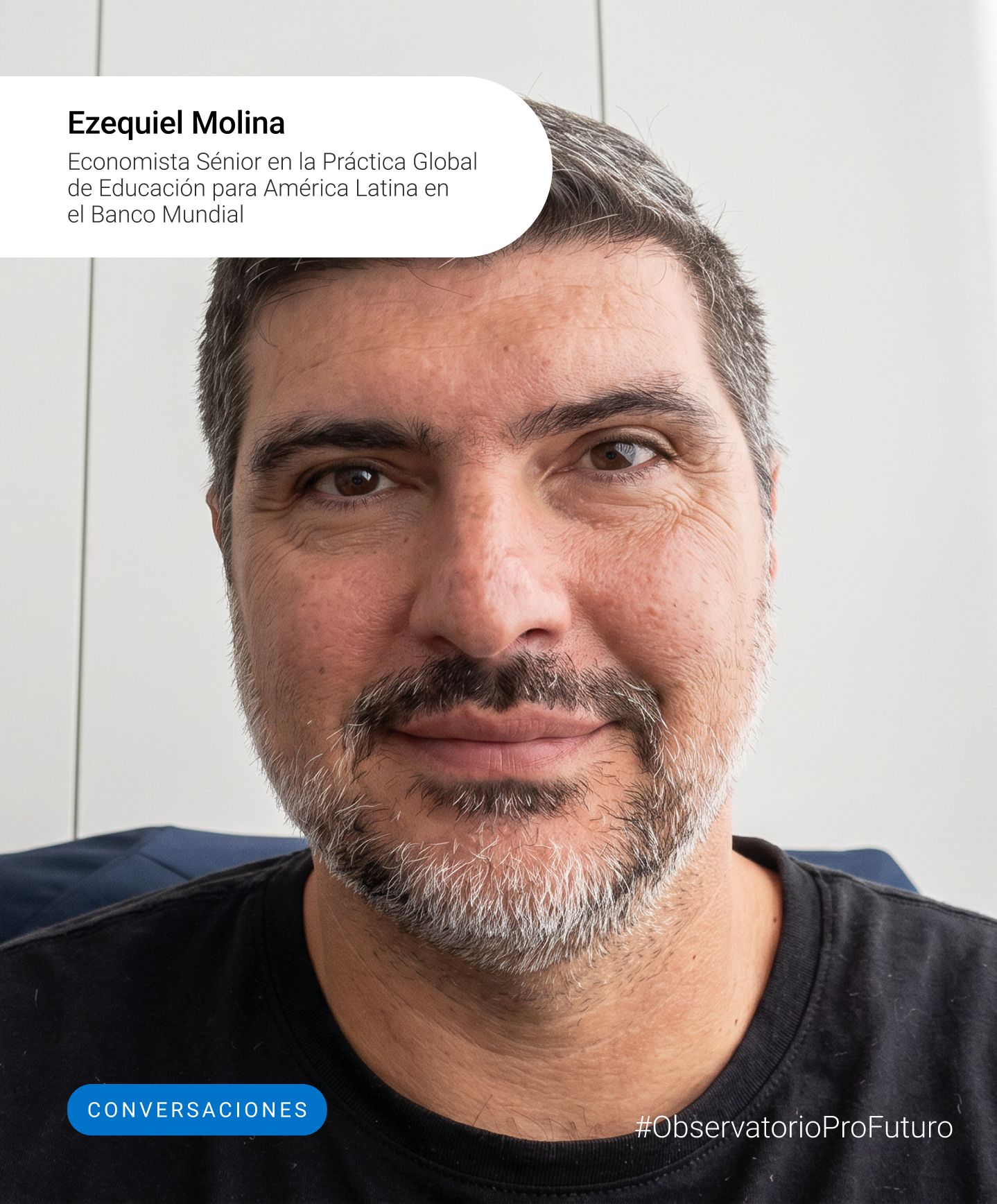
The truth is, the feeling of being overwhelmed is nothing new. But even they are surprised when a figure is put on it: “They knew it was a lot, but they didn’t know it was that much,” tells us Ezequiel Molina, a specialist at the World Bank, an institution whose education department has promoted a methodology to help school principals free up time to devote to tasks that truly impact their students’ learning.
“Pedagogical leadership has three times the impact of administrative management,” Molina notes in an interview with the ProFuturo Observatory. The evidence on what works in a school is well-known. When the principal enters the classroom, observes lessons, and provides concrete feedback to teachers, results improve. In some cases, that improvement translates to an additional half-year of learning per grade. But, as we well know, the difficulty lies not in knowing this, but in being able to do it.
And this is where artificial intelligence comes in—not as a tool for teaching, but as a way to reorganize time. Reports that used to take over an hour can now be completed in minutes; data analysis speeds up; repetitive tasks are simplified. The immediate effect is evident. The interesting part comes later.
“They stop asking AI to write for them and start using it to think better,” explains Molina. This shift in usage opens up new possibilities: detecting patterns in learning outcomes, consulting regulations more efficiently, or better preparing feedback for teachers. But above all, it allows for something more fundamental: reclaiming time to return to the classroom.
In this interview, Ezequiel Molina tells us how they developed the methodology that has made this possible, what it consists of, how it works, and what results they’re seeing. Don’t miss it.