

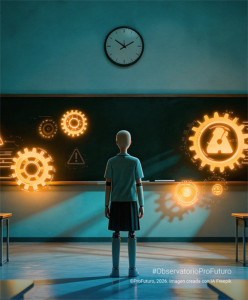
What do we really know—and what do we still need to learn—about the impact of AI on student learning? Who is currently defining the rules governing the development of educational artificial intelligence? What do teachers need to understand about AI in order to use it appropriately in the classroom?
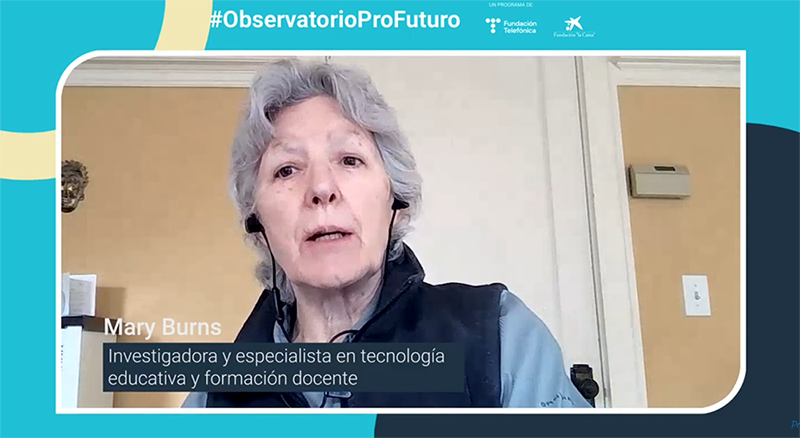
Mary Burns, a researcher specializing in educational technology and teacher training, has spent months analyzing the impact of AI on education together with researcher Rebecca Winthrop of the Brookings Institution. The starting point of this research was a shared concern. A familiar pattern. “For a long time we saw something similar with social media,” she explains. “They were introduced with enormous optimism about their potential to democratize access and connect people. Only when they were already deeply embedded in young people’s lives did we begin to understand the harms they could also produce.” Observing this widespread trend, they began to ask themselves: could something similar be happening with artificial intelligence in schools?
Burns is by no means a technophobe. On the contrary: she has spent decades working on educational technology projects in different countries. But precisely that experience has taught her that every innovation brings unexpected consequences. “Technology always gives something and always takes something away,” she says, recalling an idea from media critic Neil Postman. “For every benefit there is also a reaction, sometimes a very significant one.” For now, the balance is negative. The study’s conclusions indicate that, at present, the risks outweigh the benefits.
In this interview, Burns dissects the findings of the research. The warning signs we should pay attention to. For example, the speed at which these tools are entering classrooms without specific regulation and without having been designed with student learning in mind. There is also the question of who is defining the rules of the game. Burns points out that much of the development of artificial intelligence is currently in the hands of a small number of global technology companies. And there is the lack of solid evidence about the effects these tools may have on learning. “We need much more rigorous research,” Burns warns. “Especially on how students interact with these technologies and what their long-term effects may be.”
But Burns also talks about solutions and about what teachers themselves say they need to learn about artificial intelligence. Because, as she insists during the interview, the outcome is not predetermined: it is still possible to tilt the balance toward the benefits.
In this video, we explore which decisions could make the difference before it is too late.